.svg)
Table of Contents

Customer service has become the primary sales driver, as 89% of buyers turn a first trial into a repeat purchase after a positive and seamless experience. You know full well that unsolicited calls and generic emails wear out your audience, which is why a marketing platform unified becomes your best ally. By using a solution like Octopush, you consolidate every channel of communication to offer a seamless journey. Your customers no longer want to repeat their issues every time they speak to someone new; they demand fluidity. This approach turns every interaction into a real growth opportunity for your business.
Why use an omnichannel platform?
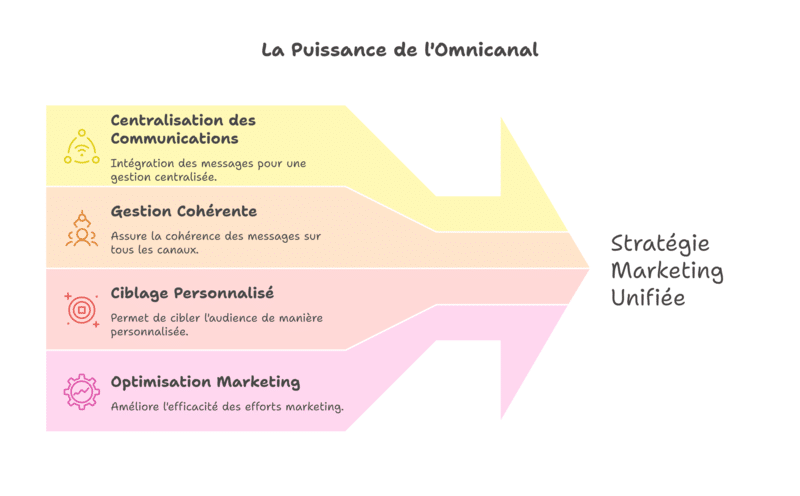
Adopting an omnichannel communication solution first and foremost meets the need for immediate responsiveness. The modern customer navigates between your website , their social media, and their emails, expecting instant recognition of their journey. An omnichannel platform for e-commerce sites centralizes these flows to avoid inconsistencies in tone that damage your brand image. (It’s a bit like your mail carrier sitting down on your sofa after saying hello: personalization should remain professional, not intrusive!). By unifying your resources, you save valuable time while refining your understanding of your audience's actual needs.
Using such a marketing management tool for large accounts or SMEs directly boosts your internal productivity. Your teams no longer waste energy switching between ten different tabs to respond to a contact. Campaign management becomes simpler because every piece of data is synchronized in real-time real-time in your CRM. You will then see a drastic reduction in communication errors and an increase in engagement. A company that masters its touchpoints naturally inspires more trust than an organization with fragmented messaging.
How can you centralize your marketing communications?
To successfully centralize, you must first connect your existing tools to a single interface. An all-in-one marketing software for SMEs allows you to link your inventory, sales, and discussion channels. A good habit is to check the compatibility of your APIs before migrating your data. Once the connection is established, every SMS, email or WhatsApp message converge into a single dashboard. This omnichannel marketing solution provides a 360-degree view of every customer's lifecycle.
Thepro tip lies in the intelligent automation of repetitive tasks. You can set up marketing automation workflows that trigger a follow-up SMS after a cart abandonment on your website. This strategy ensures a constant presence without requiring your agents to be available 24/7. By centralizing your channelsin this way, you create an ecosystem where information flows freely between the service and the sales department. The platform then becomes the brain of your customer relationship, orchestrating every dispatch with surgical precision.
What is the difference between multichannel and omnichannel?
The distinction is significant: while multichannel multiplies points of contact in isolation,omnichannel makes them communicate with each other. In a multichannel setup, your customer might receive a promotion via email just after buying the product in-store. Frustrating, isn't it?Omnichannel eliminates these silos to ensure that every channel is aware of actions taken on the others. It is a experience where physical support and digital commerce merge completely.
A SaaS solution to centralize emails and social media turns this juxtaposition into a continuous conversation. If a user starts a discussion on Messenger and continues it over the phone, the agent sees the full history immediately. This contextual support makes it possible to resolve issues faster and personalize offers based on purchase history. Multichannel is an addition of channels, whileomnichannel is a multiplication of efficiency. It is this interconnection that defines the modernity of a successful communication strategy today.
How to choose your marketing platform?
Choosing your solution depends primarily on the complexity of your workflows and the size of your customer base. You should prioritize tools that are scalable and capable of integrating new channels such as RCS or AI chatbots. A good platform must offer an intuitive interface so that your teams can adopt it without major technical friction. (Nobody wants to spend three months in training just to send a newsletter…). Also, check the quality of technical support and the robustness of the reportingfeatures.
Carefully analyze how the tool handles data and whether it allows for granular segmentation of your audience. A high-performance omnichannel platform , such asOctopush for SMS marketing should help you measure your ROI precisely. Check if the solution offers A/B testing features to continuously optimize your campaigns . Costs should be weighed against time savings and reduced unsubscribe rates. A smart investment in robust software often pays for itself within the first few months of intensive use.
What are the benefits of an omnichannel strategy for a business?
The primary tangible benefit is a significant increase in your conversion rate. By being present at the right time on your customer's preferred channel, you reduce friction in the purchasing process.Omnichannel also enables inventory management is more precise, preventing the online sale of products that are out of stock in-store. This operational consistency builds loyalty, as the customer feels valued as a whole. A seamless experience is the best defense against aggressive competition from marketplaces .
You optimize your marketing costs by stopping the "spamming" of your contacts across all platforms simultaneously. You learn to use each channel for its specific strength: SMS for urgency, andemail for rich content. This communication strategy targeted approach improves your deliverability and protects your sender reputation. Centralizing data provides valuable business intelligence to anticipate consumer trends. Your company becomes more agile, capable of pivoting quickly in the face of unforeseen market shifts.
How can you unify your sales and marketing channels?

Unification requires adopting a core software platform that serves as a single source of truth for all your data. You need to connect your e-commerce site, physical stores, and communication tools to this central hub. This allows you to synchronize prices, promotions, and purchase histories in real time. Once this solid technical foundation is in place, train your teams to use this shared vision during every customer interaction. This approach ensures that the in-store experience is a direct extension of the one started online. It also enables you to automate restocking based on actual sales recorded across all your touchpoints.
What are the pillars of a successful customer experience?
A memorable experience is built on four pillars:
- visibility
- consistency
- personalization
- timing.
You must be present where your customers are, with a consistent message everywhere. Use the data you collect to tailor your offers to each individual's preferences. Finally, send your messages when the user is most active to maximize the impact of your marketing campaigns. The goal is to build a relationship of trust where the customer feels recognized and valued, regardless of the channel used. By mastering these pillars, you turn simple buyers into loyal ambassadors who naturally recommend your brand.
Why is data centralization vital?
Without centralization, your information remains scattered in isolated silos, leading to costly errors. Centralization provides a unified view of the customer journey, which is essential for effective personalization. It also streamlines the work of your customer service team, who will have all the context needed to respond to inquiries.
It is the very foundation of any modern, high-performance communication strategy. It provides a reliable analytical base to anticipate consumer trends and adjust your marketing investments with precision. Ultimately, this mastery of data becomes your greatest competitive advantage, allowing you to make faster and more accurate decisions.